Artist biography
While the impact of Rubens on Ward's development is well documented and was long lasting, this traditional division of Ward's career oversimplifies the diverse influences, ranging from Classical art to Old Masters and contemporary painters, that shaped his highly eclectic style.
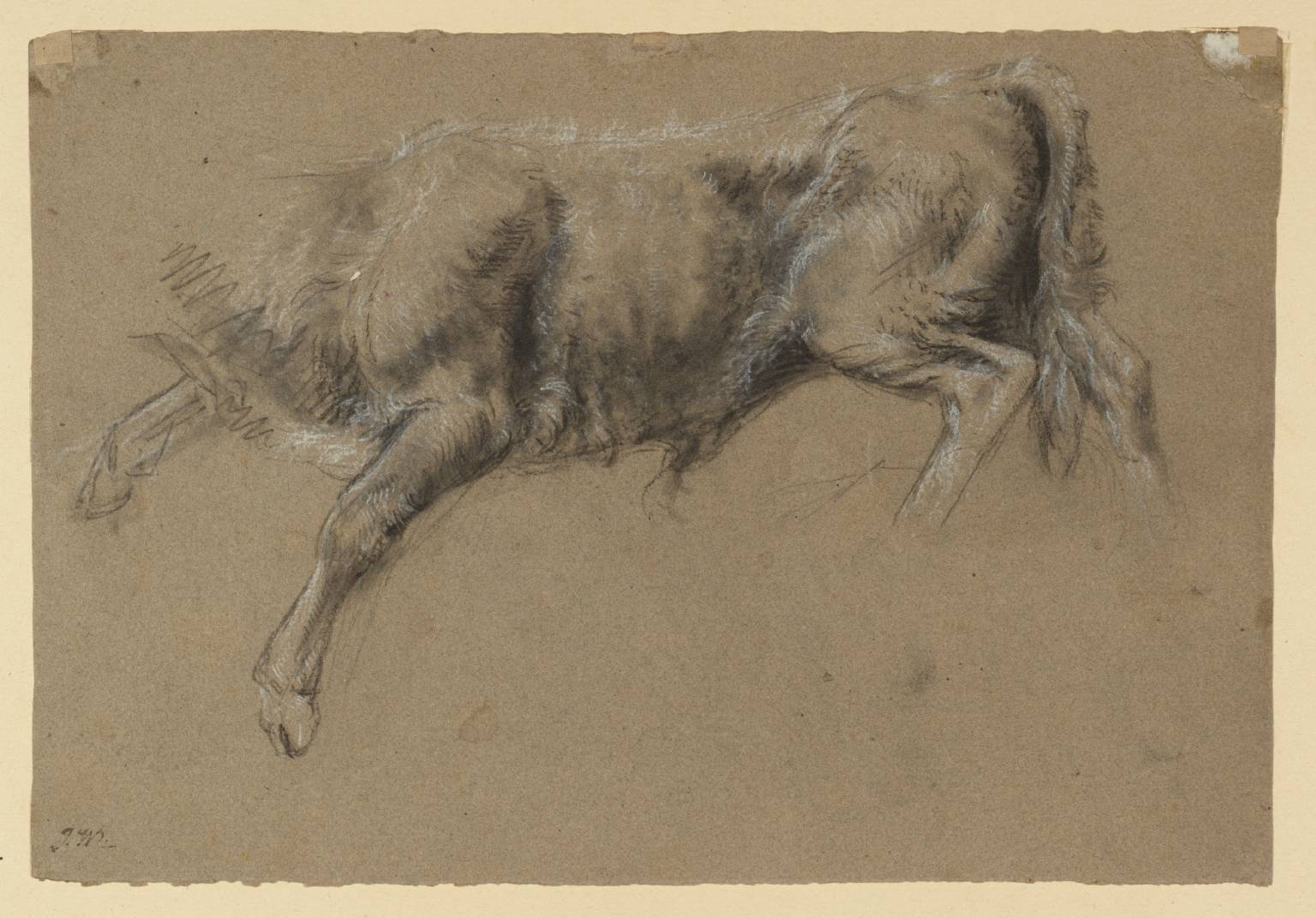
Shortly before 1810 Ward began painting portraits of thoroughbreds and blood horses. Of special note are Napoleon's charger Marengo and Arthur Wellesley, 1st Duke of Wellington's Copenhagen (both 1824; Alnwick Castle, Northumb.).
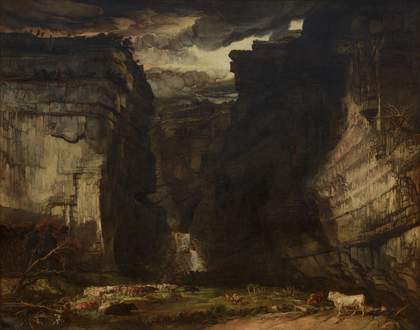
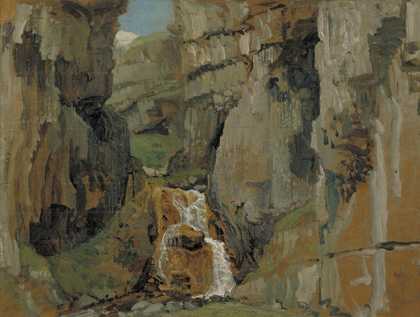
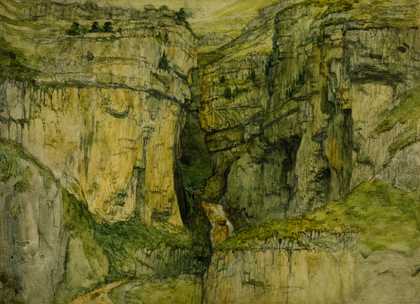
In the 1810s and early 1820s Ward produced a number of major paintings. Gordale Scar (?1812–14; London, Tate), ranks as one of his most ambitious compositions. The dark brooding landscape, dominated in the right foreground by a white aboriginal bull and populated with a vast array of cattle and deer, is one of the finest visualisations of the Sublime, an aesthetic then enjoying widespread currency.
He became increasingly disillusioned with the art world. Many works from the last several decades of Ward's life have religious themes or contain overt moral messages. Ward wrote theological tracts and poetry. A stroke in 1855 ended his artistic career.
Bibliography
J. Frankau: William Ward, A.R.A., James Ward, R.A. (London, 1904)
C. R. Grundy: James Ward, R.A.: His Life and Works (London, 1909)
D. Farr: James Ward, 1769–1859 (London, 1960)
G. E. Fussell: James Ward, R.A.: Animal Painter, 1769–1859 (London, 1974)
E. Nygren: ‘James Ward's Exhibition Pictures of 1838', A. Bull., lxi (1979), pp. 448–59
——: The Art of James Ward, R.A. (1769–1859) (Ann Arbor, 1980)
——: James Ward's ‘Gordale Scar': An Essay in the Sublime (London, 1982)
EDWARD J. NYGREN
Article provided by Grove Art Online www.groveart.com
Copyright material reproduced courtesy of Oxford University Press, New York