Artist biography
With his mirrorworks of 1961, Mirror Relief (1961; artist's col.) and the Battle of Reichenfels (1961; Paris, Bernard Aubertin priv. col.), Haacke freed himself from the object, and the water-containers done after 1962 are determined by technical factors, only formally recalling minimal art.
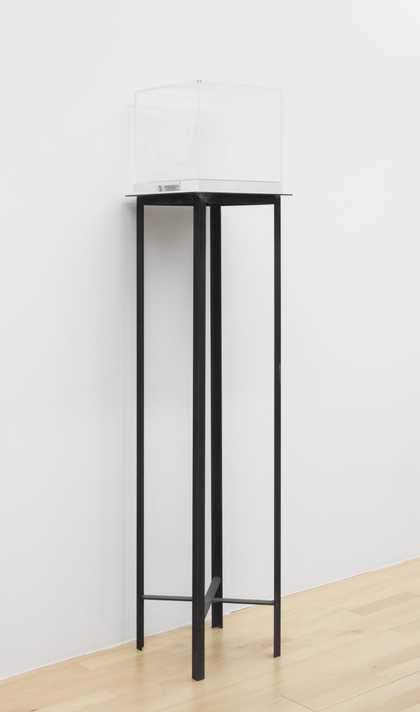
In the second half of the 1960s Haacke added new components to his physical systems in real time. Biological phenomena became ‘unassisted ready-mades'. But unlike Duchamp's ready-mades, which lose their original function, Haacke's works were isolated phenomena which, although signed by the artist as works of art, still showed the real phenomenon in real time. In his political works after the late 1960s, Haacke transferred the principle of the real-time system to the analysis and exposure of social structures.
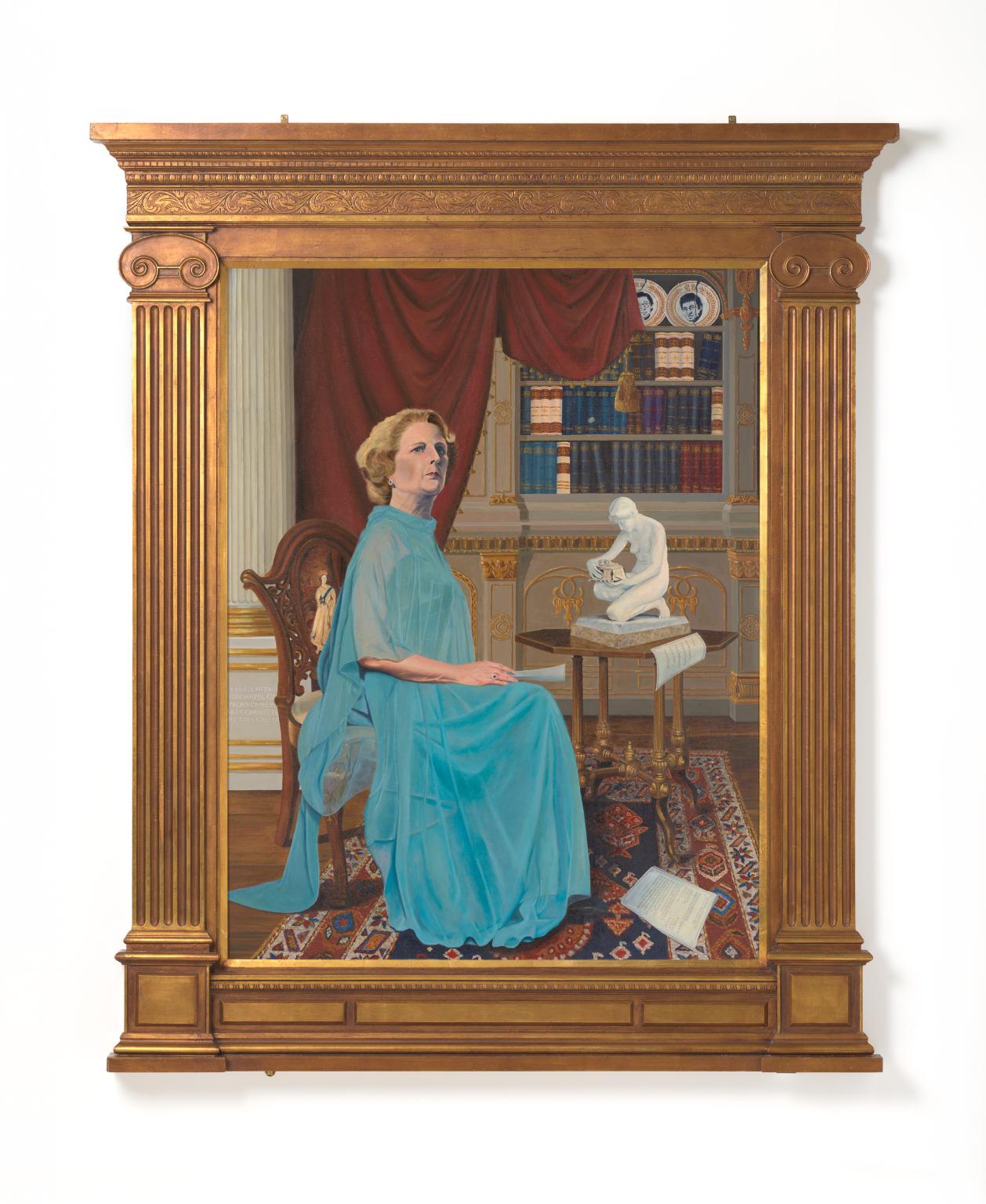
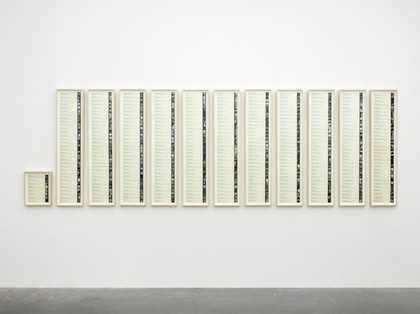
In his work Haacke touched on taboos in the social system, using his art to aim for the nerve-centre of the establishment. He cannot be bracketed in any artistic trend; his works from the 1960s consist, in a conceptual way, of text and photograph, while towards the end of the 1970s he painted large pictures, as did many contemporaries.
Bibliography
Hans Haacke: Recent Work (exh. cat. by J. Burnham, U. Chicago, Ren. Soc. Gal., 1979)
Hans Haacke (exh. cat., intro. D. Maticevic; Zagreb, Gal. Contemp. A., 1980)
Hans Haacke: Volume II, Works 1978–1983 (exh. cat. by T. Brown and W. Grasskamp, London, Tate, 1984)
Hans Haacke: Nach allen Regeln der Kunst (exh. cat. by U. Giersch and others, Berlin, Neue Ges. Bild. Kst, 1984)
Hans Haacke: Unfinished Business (exh. cat., ed. B. Wallis; New York, New Mus. Contemp. A., 1986)
EVA MEYER-HERMANN
Article provided by Grove Art Online www.groveart.com
Copyright material reproduced courtesy of Oxford University Press, New York