Anni Albers
1899–1994
© 2026 The Josef and Anni Albers Foundation/Artists Rights Society (ARS), New York/DACS, London
License this image
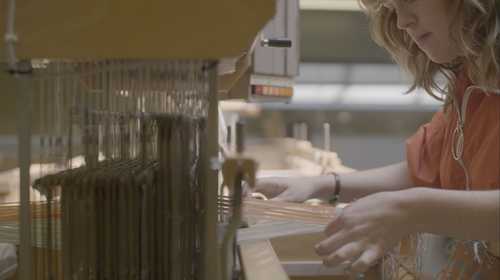
Anni Albers (1899–1994) was born Annelise Else Frieda Fleischmann in Berlin, Germany, to a bourgeois family of furniture manufacturers. In 1922 she joined the Bauhaus, an influential art and design school established by the architect Walter Gropius in Weimar, and enrolled in the school’s weaving workshop. It was at the Bauhaus that she met the artist Josef Albers, who she married in 1925. She completed her diploma in weaving in 1930 and succeeded Gunta Stölzl as the head of the weaving workshop the following year. However, in 1933 the Bauhaus closed under increasing pressure from the Nazi party, and the Alberses fled to America when they were invited by the American architect Philip Johnson to teach at Black Mountain College, an experimental art school in North Carolina. There they initiated and led the art programme until 1949. That year, Anni Albers held her first retrospective at the Museum of Modern Art in New York, the first solo exhibition to be dedicated to a textile artist at the institution. In 1950 she moved for the final time in her life to New Haven, Connecticut, when Josef Albers was appointed to teach in the Department of Design at Yale University.
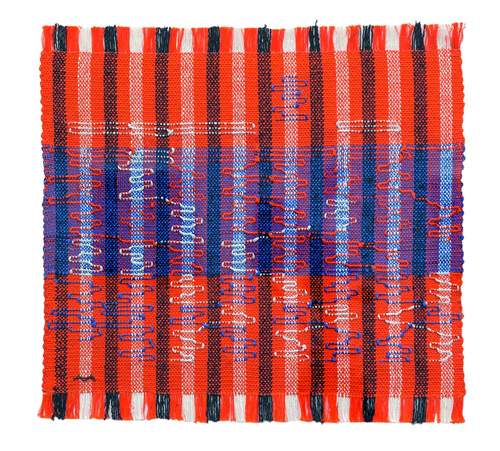
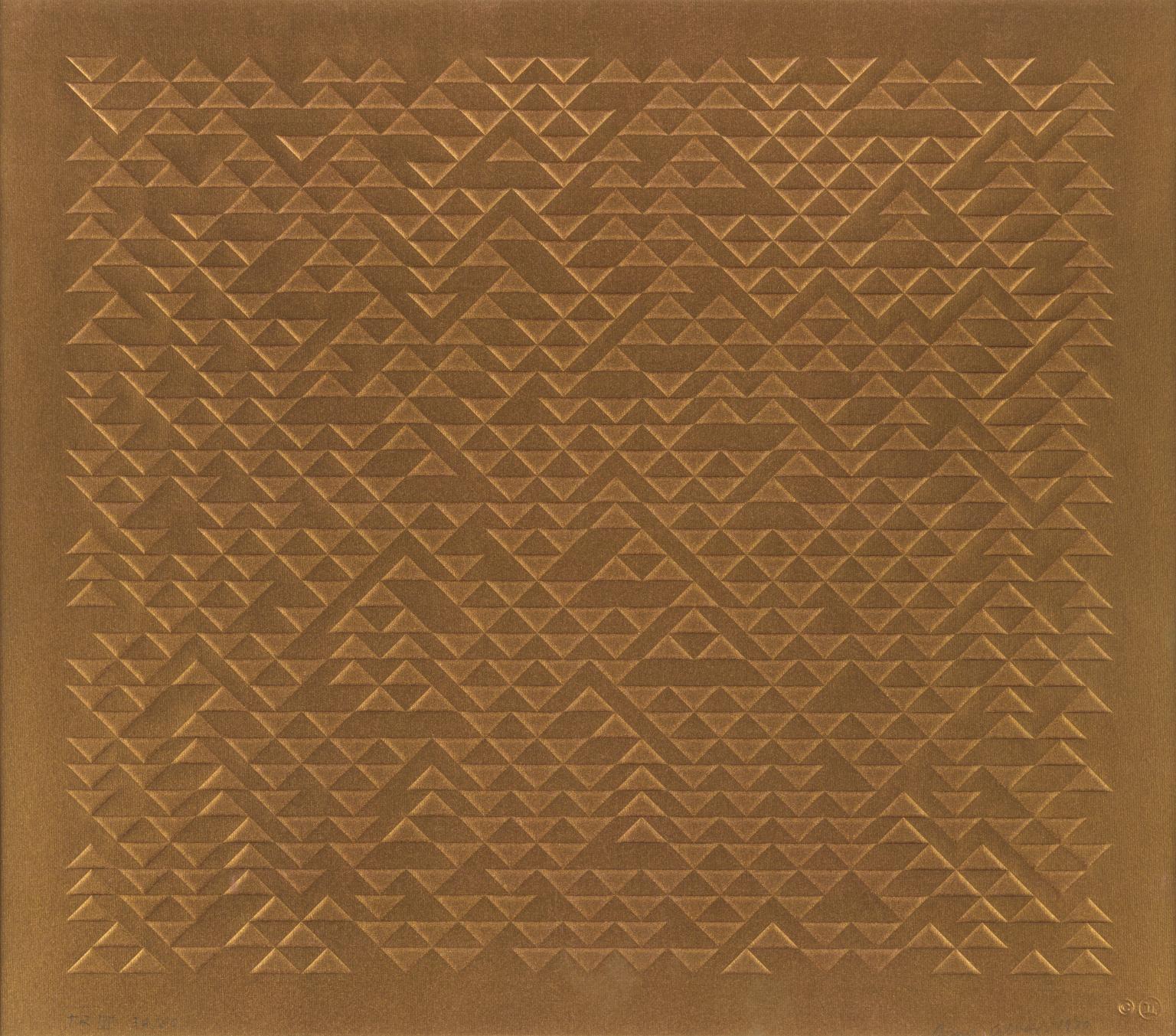
Anni Albers continued to hand-weave until the late 1960s when she began to focus on printmaking. Throughout her career she advanced weaving as a modernist medium across the disciplines of art, design and architecture, but also rooted her practice within the ancient and sophisticated textile traditions that she studied from around the world. For example, the Alberses made regular visits to Latin America and became avid collectors of pre-Columbian art and textiles. Anni Albers drew inspiration from these objects and materials and admired their communicative role within ancient Peruvian culture where there were no other forms of written language. She continued to explore textile-related concerns in her printmaking practice, investigating the use of pattern, line, knotting and texture. As a writer she published articles on weaving throughout her career, including the seminal publications On Designing (1959) and On Weaving (1965).
Further reading
Nicholas Fox Weber and Pandora Tabatabai Asbaghi, Anni Albers, exhibition catalogue, Solomon R. Guggenheim Museum, New York 1999.
Nicholas Fox Weber, The Bauhaus Group: Six Masters of Modernism, New Haven 2011, pp.341–415.
Ann Coxon, Briony Fer and Maria Muller-Schareck, Anni Albers, exhibition catalogue, Tate Modern, London 2018.
Priyesh Mistry
October 2018